Operations: Most Popular
The Most Popular operation selects the value that appears most frequently across all records in the duplicate group. It is a consensus-based approach — the value that the majority of records agree on wins.
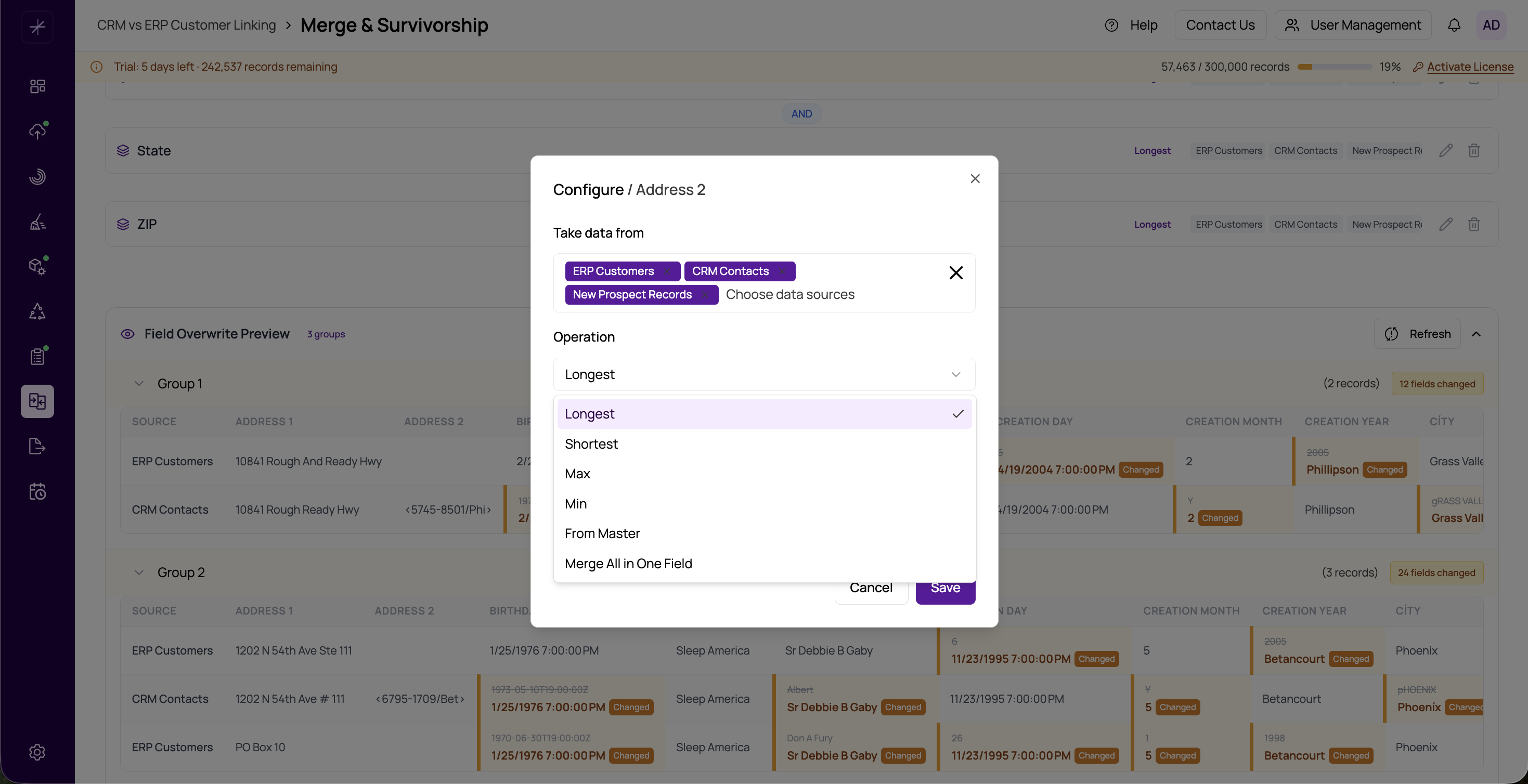
When to Use Most Popular
Most Popular is ideal when:
- Multiple data sources contribute records, and the majority are likely correct
- You want the dominant value rather than the longest or most recent
- Fields have a small number of valid options (e.g., country name, department, status)
- You're standardizing values by consensus across sources
Example: Four records for the same contact have city values: "New York", "New York", "NY", "New York". Most Popular returns "New York" because it appears three times.
Tie-Breaking
When two values appear equally often, Most Popular returns the first value encountered (by record order within the group). To handle ties more deliberately, combine Most Popular with data source filtering — prioritize trusted sources by including only their records in the comparison.
Tip
Most Popular works best with categorical fields (country, state, status, type). For free-text fields like addresses, Longest is usually more appropriate.
Case Sensitivity
Value comparison is case-sensitive by default. "New York" and "new york" are counted as different values. To get the best results, run Data Cleansing to standardize casing before executing merge rules.
Null Handling
Null values are excluded from the frequency count. If the most common non-null value appears once and there are three nulls, Most Popular still returns that non-null value (nulls don't count as a "vote" for null).